

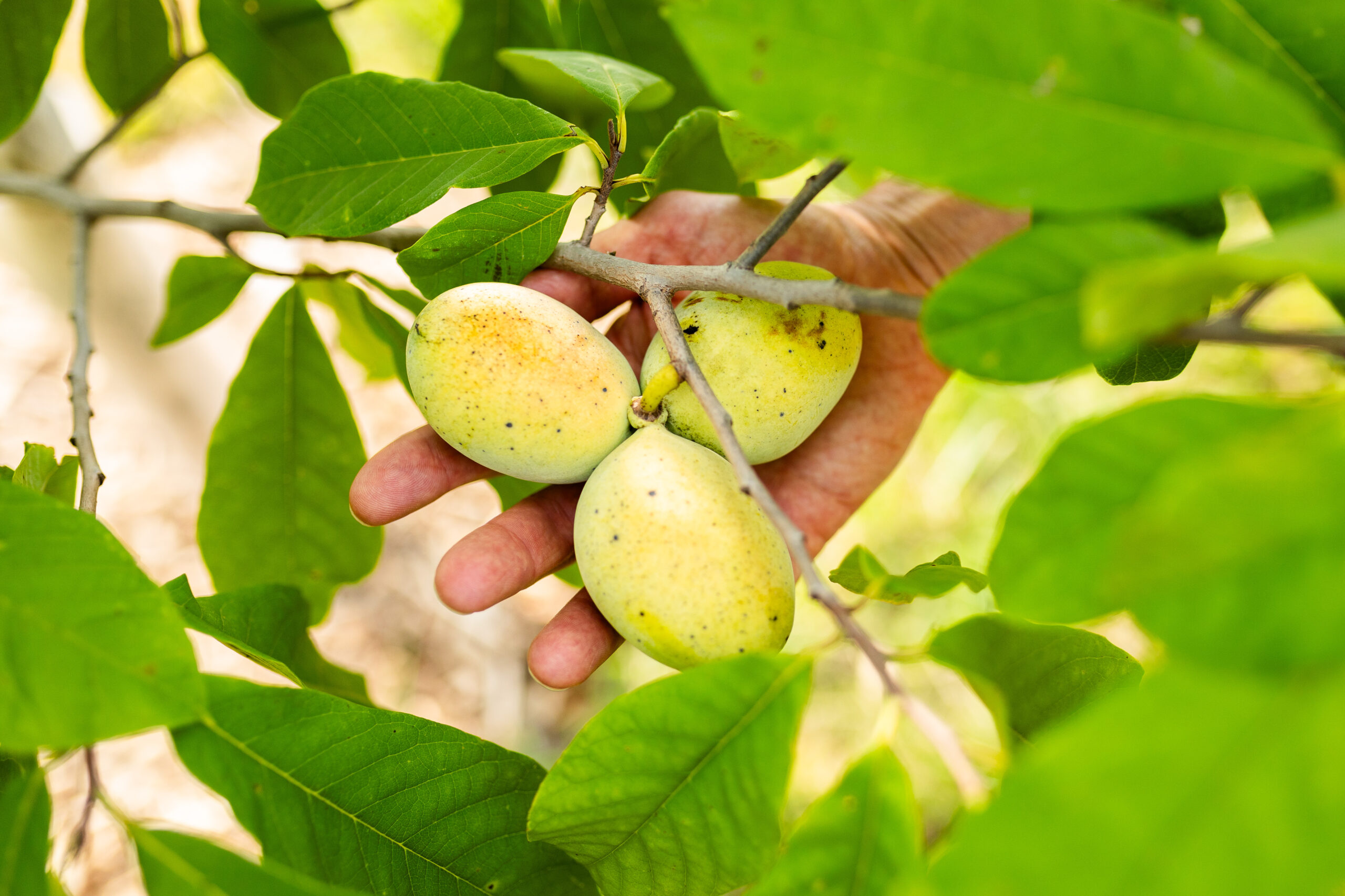

When Texas landowners talk about native fruits, we usually think of mustang grapes, dewberries, or maybe the occasional persimmon. But tucked away in the shady understories of East Texas forests grows a remarkable and astonishingly overlooked native treasure: the pawpaw (Asimina triloba), the largest edible fruit native to North America.
Creamy like a banana, fragrant like a mango, and wrapped in a custard-soft interior, the pawpaw tastes almost tropical, yet it thrives not in jungles but in quiet river bottoms from the Appalachians to the Big Thicket. Most Texans have never tasted one… and many have never even heard of the tree. But they should.
A Tropical Treat Growing in Texas Soil
Despite its banana-like nickname (“the Texas banana,” “the hillbilly mango”), the pawpaw is a true North American native. It grows naturally in the humid Southeast, including the easternmost counties of Texas—especially the Neches, Angelina, Sabine, and Red River watersheds, where moist, shaded understory conditions allow it to flourish.
Key features Texas landowners will recognize:
- Small understory tree: Usually 10–25 feet tall
- Large, soft fruit: 3–6 inches long, ripening late summer to early fall
- Broad, drooping leaves: Giving it an almost tropical look in the right habitat
- Pyramid-shaped growth habit: With multiple stems forming tight colonies or “pawpaw patches”
The fruit itself has a rich, custard-like texture, often compared to mango, vanilla pudding, banana, or even cantaloupe depending on ripeness. No wonder early American settlers, Indigenous peoples, and even the Lewis and Clark expedition relied on it as a food source.
A Native Tree with Ecological Value
Beyond its fruit, the pawpaw plays a quiet but important role in forest ecosystems:
- Host plant for the zebra swallowtail butterfly: The zebra swallowtail (Eurytides marcellus) depends almost entirely on pawpaw species for reproduction. Where pawpaws grow, the butterfly follows.
- Wildlife value: Opossums, raccoons, foxes, and squirrels eagerly feed on fallen fruit. Deer rarely browse the leaves, making pawpaw patches surprisingly resilient.
- Excellent for native understory restoration: Because pawpaws prefer partial shade and rich, moist soils, they’re useful for restoring forest structure in East Texas riparian corridors.
Why Most Texans Don’t Know the Pawpaw
Despite being native to Texas, the pawpaw is practically unknown for a few reasons:
- Highly perishable fruit – It bruises easily, making it unsuitable for grocery stores.
- Short shelf life – Fruit ripens quickly and must be eaten or processed within days.
- Growing in remote spots – Usually in moist bottomlands or shaded creek banks.
In other words: you won’t find pawpaw fruit at H-E-B—only in the woods or in your own backyard if you plant it.
Can You Grow Pawpaw in Texas? Absolutely.
For landowners east of I-45, conditions are often close to ideal. For those farther west, success improves with irrigation, light shade, and rich organic soil.
Basic growing tips:
- Shade for the first 2–3 years; more sun once mature = more fruit
- Moist, well-drained soil with high organic matter
- Plant two genetically different trees for pollination
- Hand pollination may increase fruit set
Pawpaws rarely have insect problems thanks to natural compounds in the leaves that deter many pests.
What Do You Do With Pawpaws?
Texans who manage to gather fruit have a short but delicious window to enjoy it. Pawpaws shine in:
- smoothies
- custards and puddings
- ice cream
- quick breads
- eating fresh off the tree
The flavor profile is unlike anything else native to our state, sweet, fragrant, and almost tropical.
Why Texans Should Know the Pawpaw
For anyone managing land in East Texas, the pawpaw is more than just a novelty fruit:
- It’s a native species tied to important wildlife.
- It’s a low-maintenance understory tree perfect for riparian zones.
- It offers a unique, hyper-local food experience unlike any store-bought fruit.
- And it reconnects us with a native heritage stretching back thousands of years.
This is one of those species that reminds us just how diverse Texas really is. Hidden in the forest shadows is a fruit that rivals anything from the tropics, yet it’s been here all along.