


Doves are some of the most familiar birds in the Texas landscape. They line fence rows, flush from gravel roads, gather near grain, and call softly from trees at daybreak. Because they’re so common, most landowners don’t give them much thought. But Texas is home to a surprisingly diverse group of dove species, each telling a slightly different story about habitat, land use, and change.
Doves are one of the few bird groups that feed their young with crop milk, allowing both parents to raise chicks efficiently on seed-based diets. They’re built for speed rather than show, with strong flight muscles and quick, direct takeoffs that help them escape predators in open country.
They also invest little energy in nest-building, instead focusing on repeated nesting attempts when conditions are good. Most doves are ground feeders, relying on native grasses, forbs, and agricultural spills—making their numbers closely tied to how land is managed.
These traits explain why doves are so widespread and familiar in Texas, and why changes in dove populations often reflect changes in the land itself.
The Doves of Texas
Below are the dove species most Texas landowners encounter, presented in plain terms that reflect how these birds actually use the land.
Mourning Dove (Zenaida macroura)
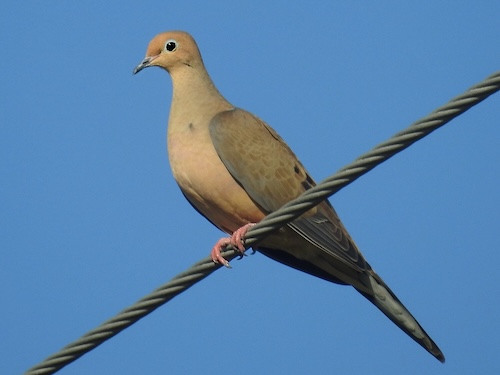
The mourning dove is the standard by which all other Texas doves are measured. Slim, fast, and widespread, it’s the bird behind the soft, rolling calls heard across pastures and fence lines. Mourning doves thrive in open landscapes with scattered cover and seed-producing plants, which is why they occur statewide in nearly every habitat type.
Mourning Dove Quick ID: long pointed tail • gray-tan body • whistling wings on takeoff
White-winged Dove (Zenaida asiatica)
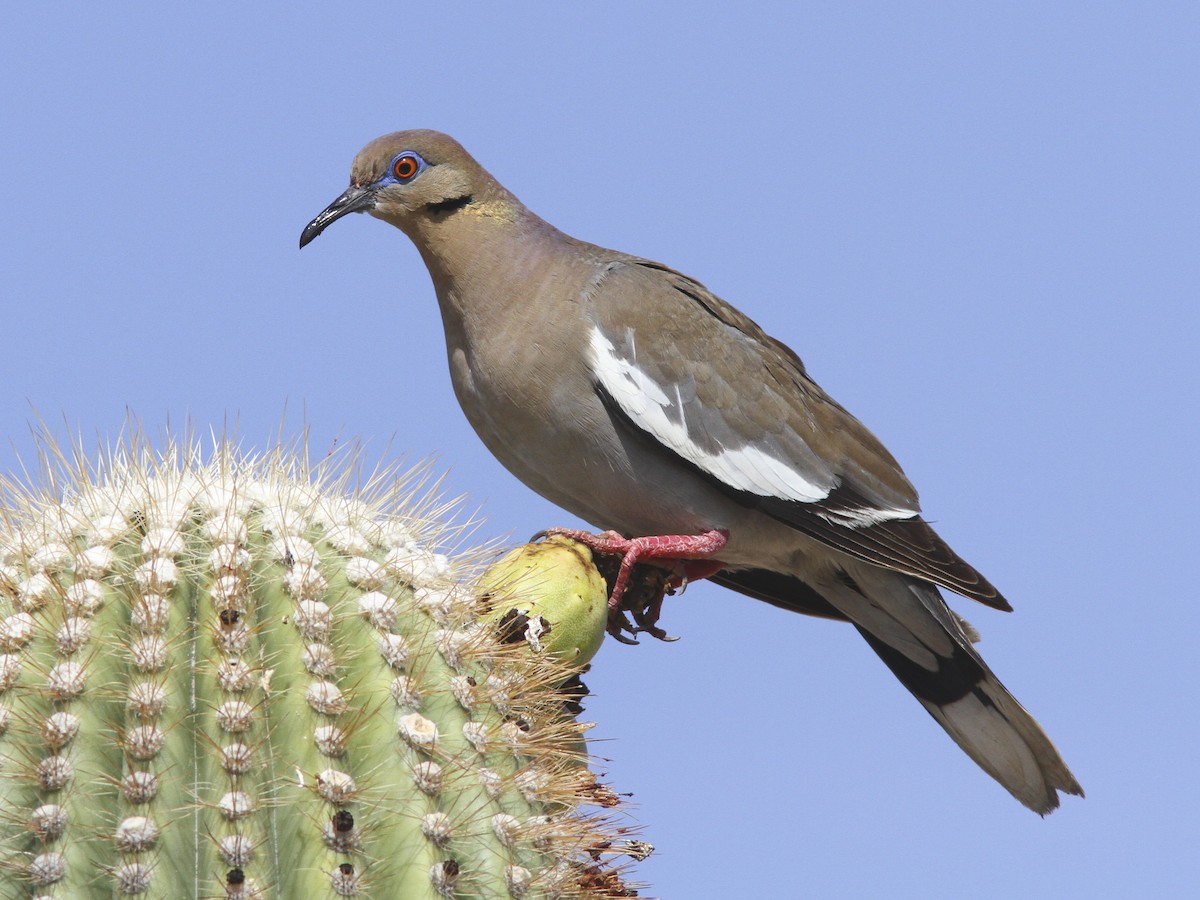
Once concentrated mainly in South Texas, white-winged doves have expanded dramatically over the past several decades. Larger and more robust than mourning doves, they’re now common in towns, suburbs, grain fields, and oak-rich landscapes. Their bold white wing stripe makes them easy to identify in flight.
White-Winged Dove Quick ID: bold white wing stripe • stockier build • bluish eye ring
White-tipped Dove (Leptotila verreauxi)
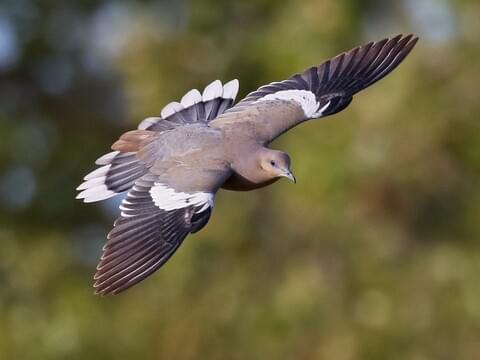
This is a quiet, ground-oriented dove found mostly in the Lower Rio Grande Valley. White-tipped doves move slowly through dense thornscrub and riparian woodlands and are often heard more than seen. Their presence usually indicates intact native brush and healthy understory cover.
White-tipped Dove Quick ID: warm brown plumage • large body • white flash in tail when flushed
Common Ground-Dove (Columbina passerina)
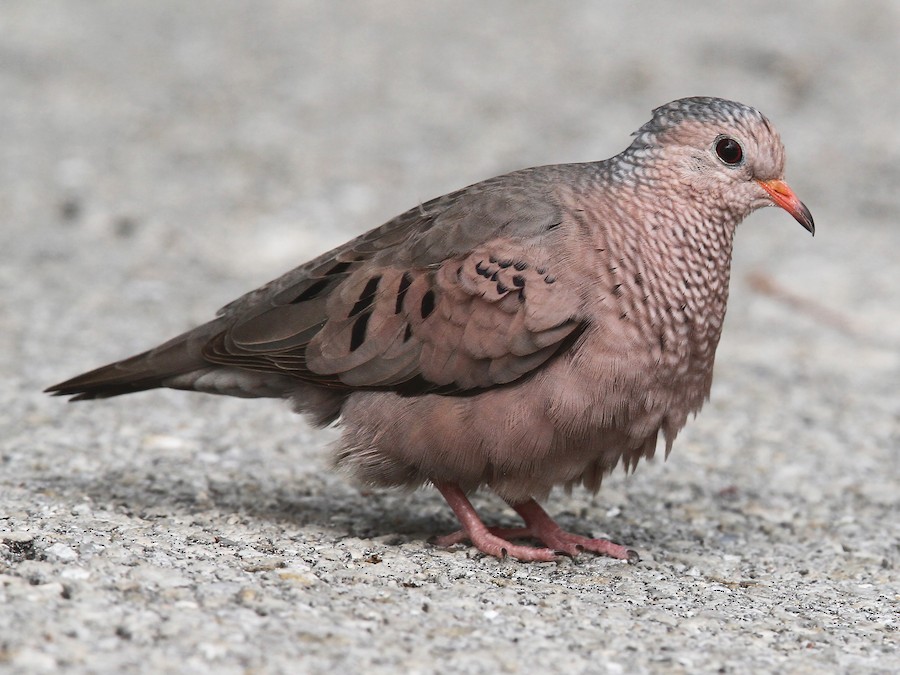
Barely larger than a house sparrow, the common ground-dove is easy to overlook. It favors sandy soils, open grasslands, and lightly disturbed areas, staying close to the ground and flushing only at short distances. Many landowners don’t realize they’re present until they learn what to look for.
Common Ground Dove Quick ID: very small size • cinnamon wing patches • short rounded tail
Inca Dove (Columbina inca)
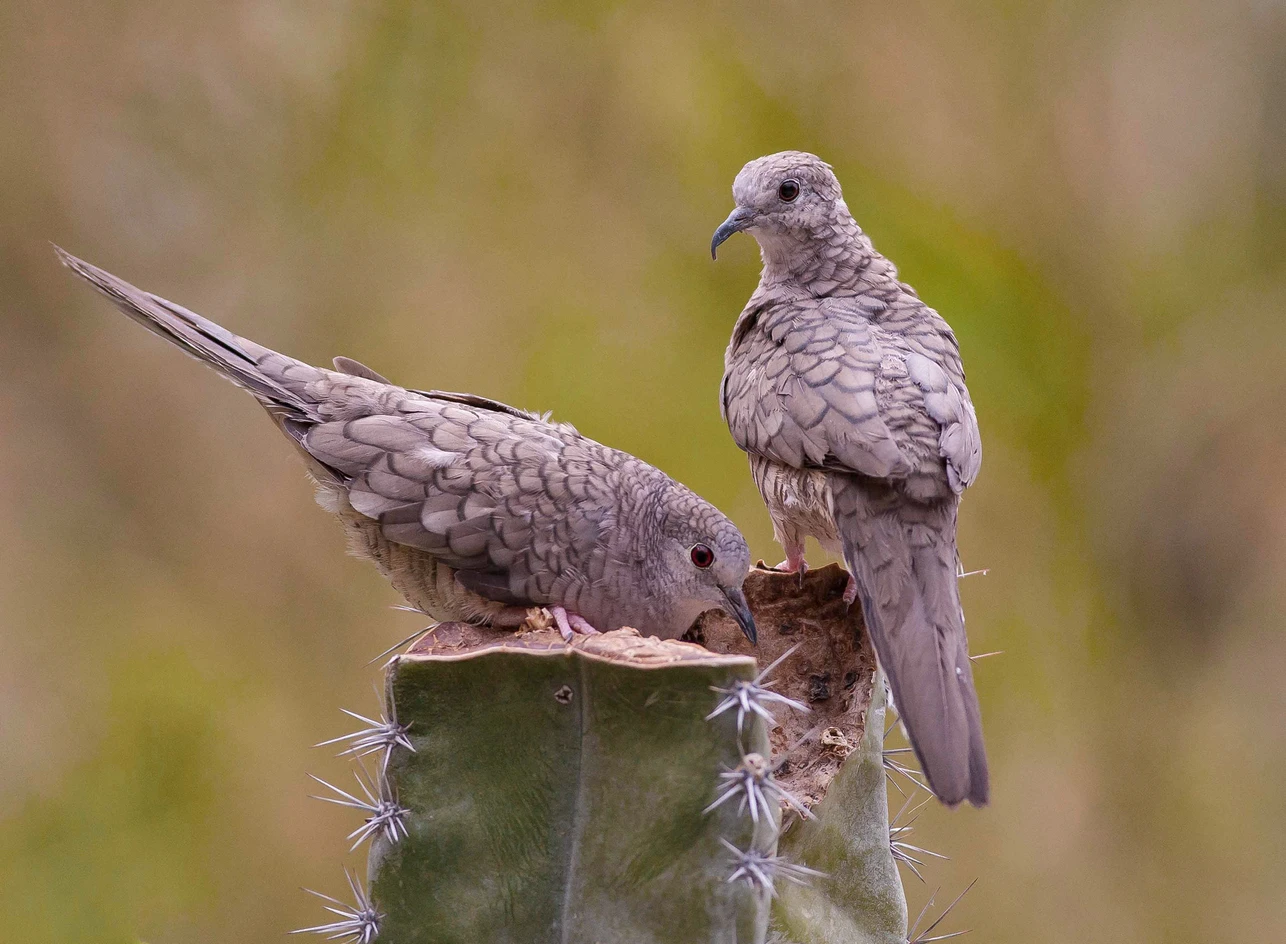
Inca doves are closely tied to human activity and are common around ranch houses, barns, patios, and small towns. Their distinctive scaled feather pattern and gentle behavior make them stand out once noticed. They tolerate heat and drought well, which has helped them thrive across much of Texas.
Inca Dove Quick ID: scaled plumage • slender profile • long white-edged tail
Eurasian Collared-Dove (Streptopelia decaocto)

A non-native species that arrived only a few decades ago, the Eurasian collared-dove has spread rapidly across Texas. Larger and paler than both mourning and white-winged doves, they’re most often seen near grain towns, bins, feed stores, and livestock operations. They do not migrate and can build large local populations.
Eurasion Dove Quick ID: pale gray body • black neck collar • square tail
But what about the Turtle Dove?
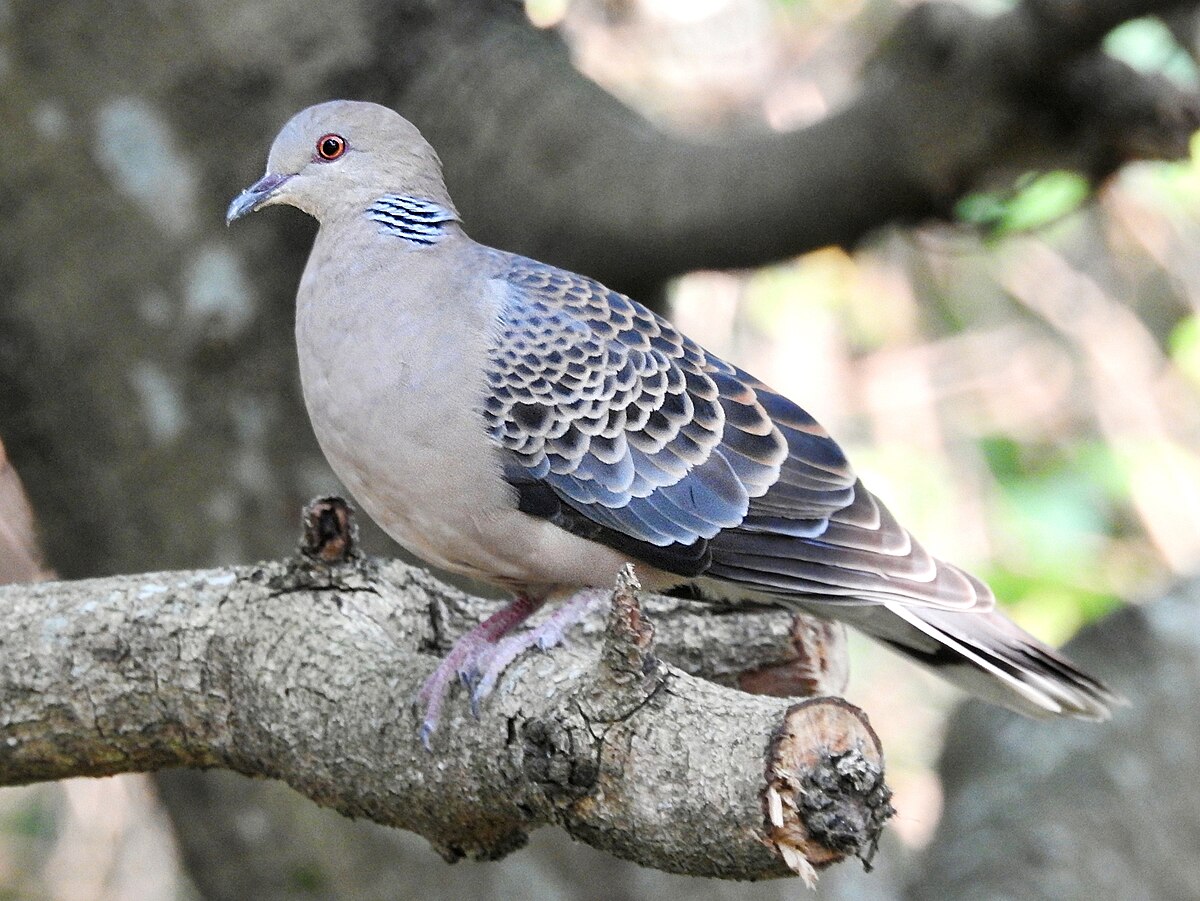
Many people are familiar with the phrase “turtle doves” thanks to the song The Twelve Days of Christmas. The line has become so culturally ingrained that it’s easy to assume turtle doves must be part of the Texas bird lineup.
They aren’t.
The “turtle doves” referenced in the song are Old World species, native to Europe, North Africa, and parts of Asia. They evolved in a completely different ecological setting and do not occur naturally anywhere in Texas or North America. The name itself comes from their distinctive purring call, not from anything related to turtles or North American doves.
So while turtle doves are culturally familiar, they’re biologically absent here. Texas has plenty of doves—just not that one.
Texas Dove Season
For many Texans, doves are more than familiar birds, they’re part of one of the state’s most enduring hunting traditions. Dove season traditionally opens on September 1 and marks the beginning of the fall hunting calendar across much of Texas.
Texas supports one of the largest dove harvests in the country, largely because mourning and white-winged doves thrive in open landscapes shaped by agriculture and grazing. Properly managed land featuring native grasses, seed-producing plants, and open ground benefits both doves and the people who value them.
Not all doves are treated the same under Texas law. Eurasian collared-doves are non-native and not protected as game birds, while native species are regulated through seasons and bag limits designed to keep populations healthy.
More Than Just Background Birds
Doves are excellent indicators of how land is being used. Their numbers reflect seed availability, open ground, edge habitat, and human influence. Shifts in which species dominate, mourning doves versus white-wings, natives versus collared-doves, often mirror broader changes in land management and landscape structure.
Taking time to notice which doves are using your property helps you better understand what your land is providing and how wildlife responds to it.