


After a heavy rain in Central Texas, you might watch water run straight into the ground. Not soak in. Not evaporate. Just disappear. And where it goes matters more than most landowners realize.
If you’ve spent time walking your land, you’ve likely seen the signs. A shallow dip that drains almost instantly. A patch of ground that stays drier than it should. Areas where water never seems to linger.
Those are not random quirks. They are signs of a karst system beneath your property. And what happens below the surface directly affects what happens above it.
What is karst—and why you might not see a cave
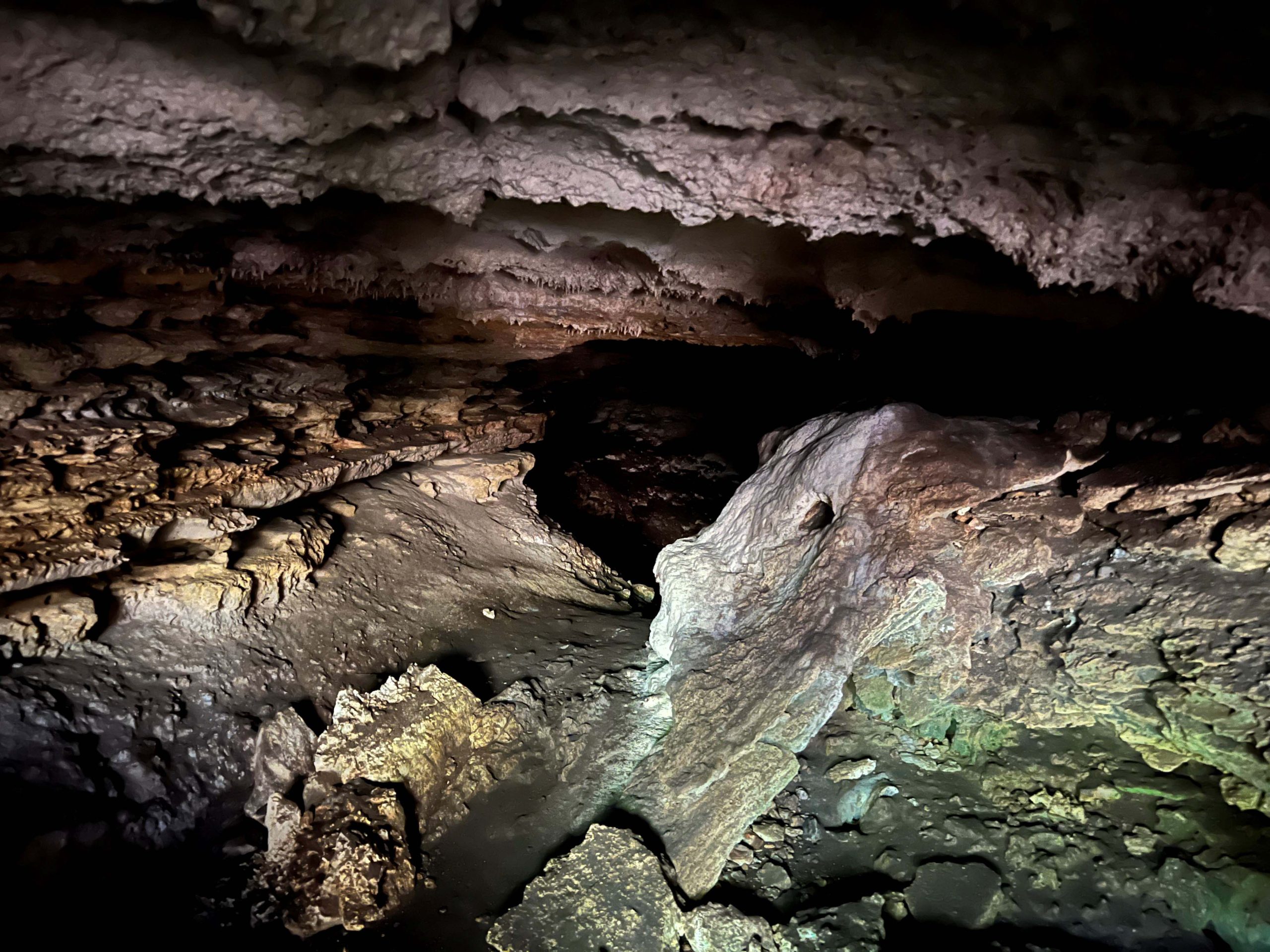
A karst is a type of landscape formed when water slowly dissolves limestone, creating cracks, channels, and underground pathways. A cave is one result of that process. It is simply a larger open space within the system.
The distinction matters. Karst is the full underground network, while a cave is just one visible feature. Most of that network is hidden, which means your land can sit on top of an active system even if you never see an opening.
This is especially true across the Edwards Plateau, where these underground pathways play a direct role in feeding the Edwards Aquifer.
Where the water goes
One of the most important things to understand about karst land is how quickly water moves. After a rain, water that appears to disappear is actually moving straight into the ground. This process, known as recharge, feeds aquifers that supply wells, springs, and entire communities.
The Edwards Aquifer Authority explains how recharge zones function and why they matter for water supply, particularly because water in these areas moves quickly with limited natural filtration, allowing surface materials to enter groundwater more easily.
In most soils, water moves slowly and is filtered along the way. In karst terrain, it can move quickly through cracks and openings, carrying whatever is on the surface with it. Research from National Cave and Karst Research Institute shows that water in these systems can travel rapidly through underground pathways with little natural filtration.
For example, applying fertilizer before a storm or spilling fuel on the ground does not just stay put. In karst areas, it can move directly into groundwater with very little resistance.
In many parts of Central Texas, water does not pool or run off. It drains quickly into the ground through natural openings in limestone.
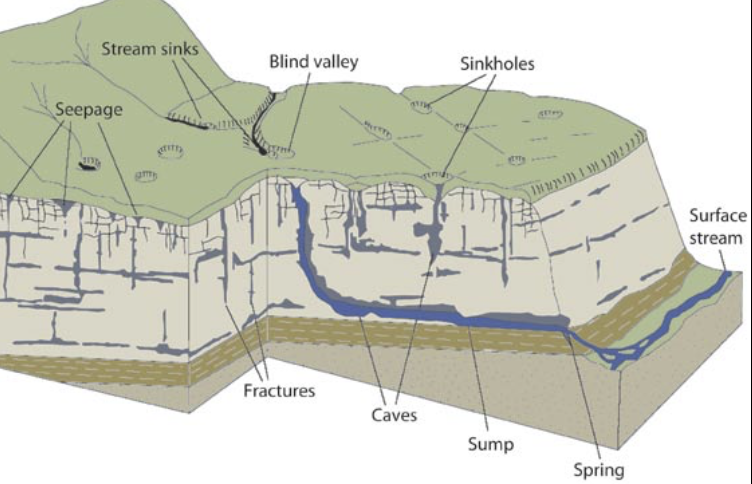
In karst terrain, water moves quickly through cracks in rock, carrying surface materials directly into groundwater, unlike slower filtration in typical soil.
The life you don’t see
There is an entire layer of life underground that most people never think about. Texas karst systems support species that have adapted to complete darkness—living their entire lives in conditions that rarely change.
Some of those species are:
- The Texas blind salamander lives in aquifer-fed waters and has no functional eyes
- Bracken Cave bats form the largest bat colony in the world and play a major role in controlling insects across Texas
- Small cave invertebrates like beetles and crustaceans spend their entire lives underground and are found nowhere else
Over time, many of these species have:
- Lost their eyesight
- Lost pigmentation
- Developed heightened senses to navigate in darkness
They survive in extremely stable environments, which also makes them highly sensitive to change. Even small disruptions on the surface, like contaminants in runoff or changes in water flow, can affect these ecosystems quickly.
What happens above ground doesn’t stay there. In karst systems, it becomes part of a much larger, living network below your feet.
How it all connects
What makes karst systems different is how connected everything is. Water doesn’t stay in one place. It moves through cracks and channels in the rock, sometimes traveling much farther than you’d expect. Because of that, what happens in one spot on your land can show up somewhere else entirely.
On karst land, that connection can influence:
- Water quality — what enters the ground can move into aquifers and wells
- Soil conditions — moisture may disappear quickly or shift in unexpected ways
- Neighboring properties — water doesn’t follow fence lines underground
- Ground stability — voids and erosion below the surface can affect what’s above it
What looks like a small, isolated feature like a rocky patch or shallow dip, is often tied into a much larger system.
Once you recognize that, it changes how you see your land.
Not a problem to fix
It’s easy to see sinkholes, rock openings, or fast-draining areas as things to fix. Many landowners try to fill them in or use them as places to push brush and debris. On the surface, that can seem practical or just another part of managing the land. But in karst terrain, those features aren’t just problems. They’re entry points.
What goes into them doesn’t disappear. It moves through the same underground system that carries water beneath your land—and often well beyond it. Once you recognize that, the approach starts to shift. It becomes less about covering up these areas and more about understanding what they do and how they function.
It’s a small change in perspective, but it often leads to better long-term decisions for your land.
Taking Care of What You Can’t See
Protecting these systems doesn’t require major changes, but it does require being intentional about a few key things. On karst land, small decisions on the surface can quickly translate into movement underground. Keeping that in mind, here are a few practical ways to manage these areas:
- Watch how water moves after a rain
Take time to walk your property and notice where water collects, where it disappears, and how fast it drains. These patterns can help you identify direct connections to the underground system. - Be mindful of timing when applying anything to the land
Fertilizers, herbicides, and pesticides can move into groundwater quickly in karst areas. If rain is in the forecast, it’s often best to wait until conditions are dry and stable. - Keep sinkholes and openings clear of debris
Avoid pushing brush, trash, or organic waste into low spots. These areas often act as direct entry points, and anything placed there can move through the system. - Use vegetation to slow and filter runoff
Maintaining plant cover is one of the simplest and most effective tools you have. Native grasses are especially well-suited for this. In Central Texas, species like little bluestem, sideoats grama, and switchgrass develop deep root systems that:- Slow water movement
- Help trap sediment
- Improve soil stability
- Avoid disturbing sensitive areas unnecessarily
Excessive grading, clearing, or heavy equipment use around karst features can alter how water enters the system and, in some cases, increase erosion or instability.
None of these steps are complicated, but together they can significantly reduce what moves underground and help protect both your land and the water it connects to.
Looking at Your Land a Little Differently
Karst Systems are easy to miss because they are mostly hidden. They do not stand out the way a pond or a stand of trees does. But they are constantly at work.
They move water, support unique forms of life, and connect your property to a much larger system across Texas. The next time you notice water slipping into the ground or a rocky area that drains faster than expected, it is worth a second look.
There is a good chance that spot is doing more for your land than it seems at first glance.