


If you’ve spent time outside in Texas at night, you’ve probably had that moment.
You flip on a porch light, step onto a patio, or walk into the garage, and something small moves across the ground. Quick. Controlled. Easy to miss if you weren’t paying attention.
In many parts of Texas, that’s a scorpion. And if you’re seeing them around your home or property, it’s not random, and it’s not unusual. It reflects the environment you’re living in. Warm nights, active insect populations, and the kinds of natural hiding places that exist across much of this region.
Most people stop at the surprise. But if you look a little closer, scorpions can tell you quite a bit about what’s happening around your property and how to manage it.
What Scorpions in Texas Actually Look Like
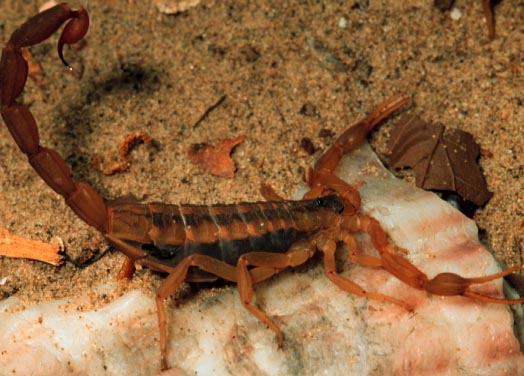
The species most people encounter is the Striped Bark Scorpion.
Key characteristics:
- Light tan to yellow body with two darker stripes along the back
- Usually between 1.5 and 2.5 inches long
- Slender tail and narrow pincers
- Able to climb walls, ceilings, and rough surfaces
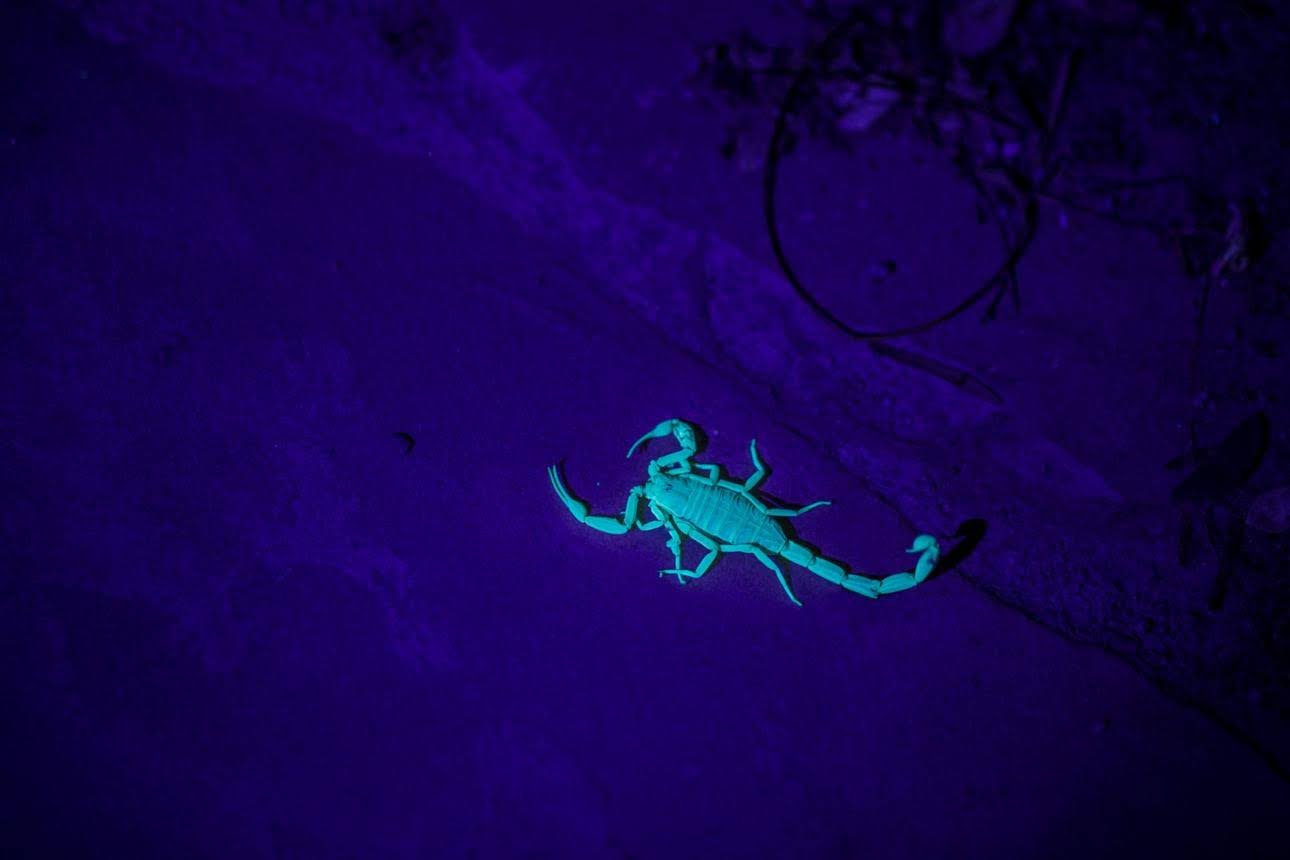
- Glows blue-green under UV light
That last trait is why some landowners use a blacklight at night. It is one of the easiest ways to see how active they really are around a structure.
Are There Different Types of Scorpions in Texas?
Yes, but most properties will only see a few.
Striped Bark Scorpion
The most common species around homes. It is also the one most likely to be encountered because it can climb and move easily across structures.
Texas Cave Scorpion
Found more often in natural, rocky areas. Less likely to show up around structures.
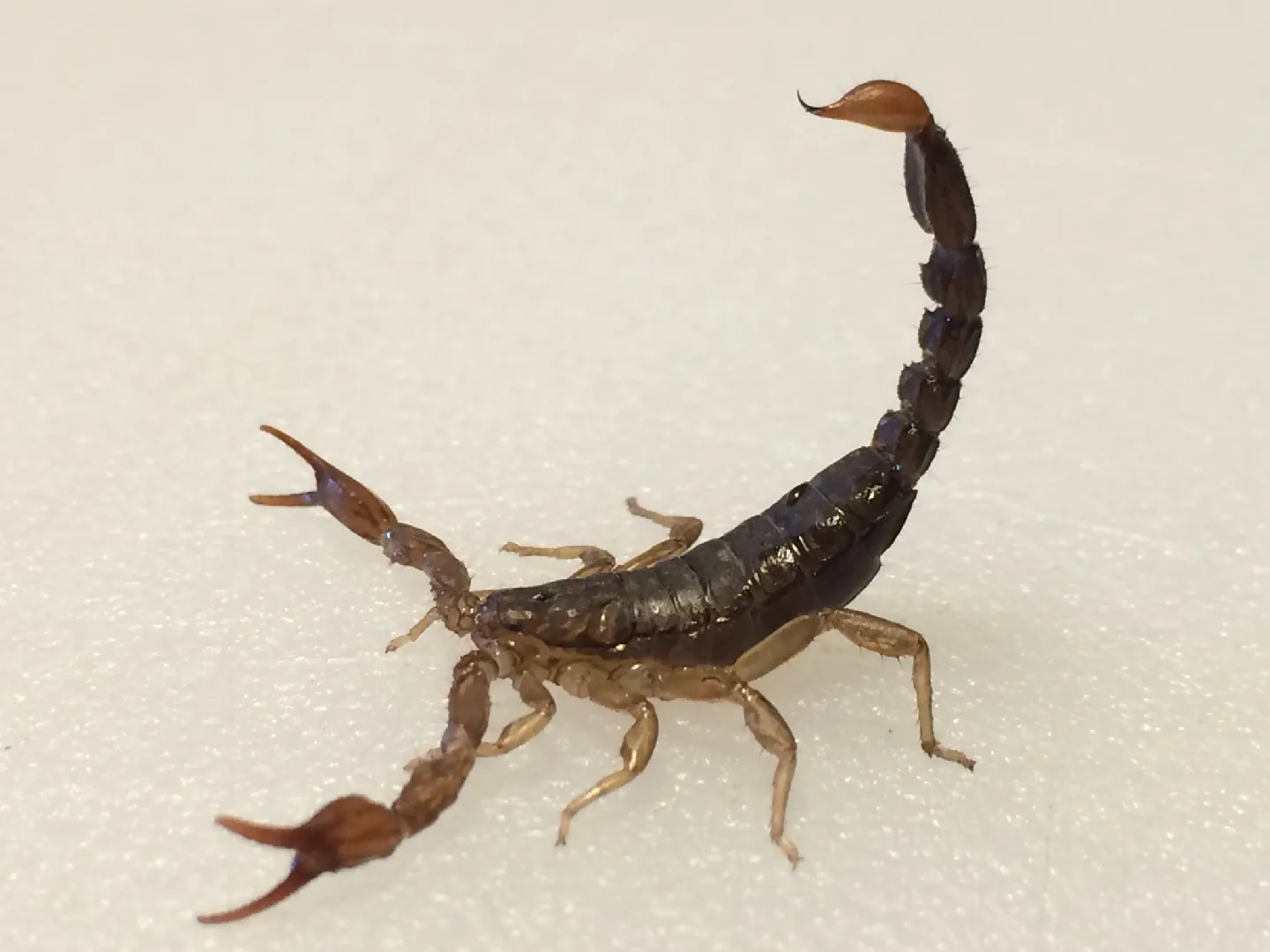
Striped Tail Scorpion
More ground-oriented and less commonly encountered in Texas residential areas.
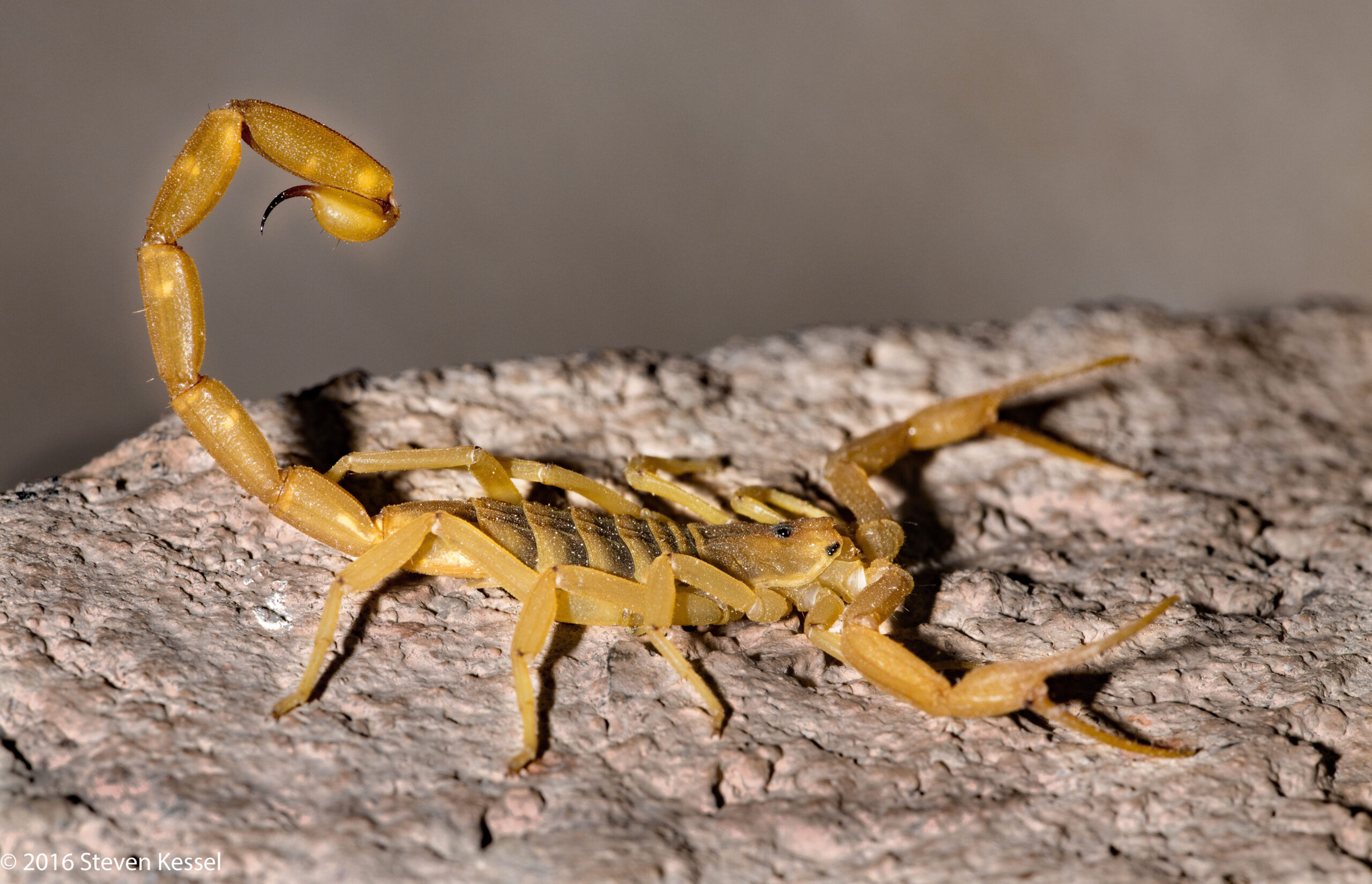
If you are regularly seeing scorpions around structures, it is almost always the bark scorpion.
Why You’re Seeing More Scorpions Right Now
As temperatures rise in late spring and summer, scorpion activity increases. They have been present the entire time. Warmer nights simply make movement easier and increase insect activity, which brings them out to hunt. They are nocturnal, so most of what they do happens after sunset when temperatures are more stable and conditions are better for movement.
The City of Austin has a helpful overview of scorpion behavior and activity patterns, especially as it relates to warmer months and residential areas.
Where Scorpions Hide and Why It Feels Unpredictable
Scorpions are selective about where they spend time.
They look for areas that are:
- Cool
- Dark
- Protected
On most Texas properties, that usually includes:
- Under rocks and limestone features
- Inside cracks in foundations or exterior surfaces
- Around landscaping with mulch or dense cover
- In garages, sheds, or storage areas
- Inside items that have been left undisturbed
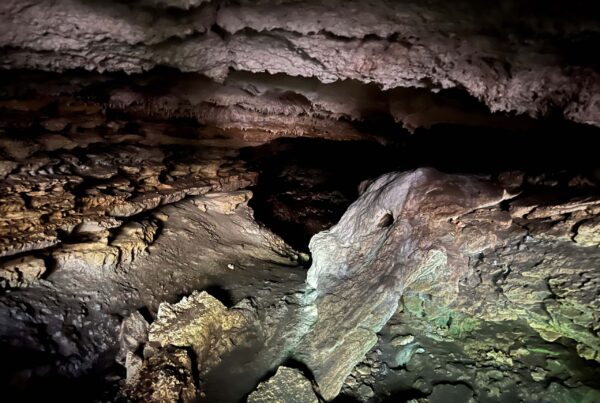
In areas with shallow soils and exposed rock, especially across the Edwards Plateau, these conditions are easy to find. That is why some properties consistently see more activity than others.
What Scorpions Tell You About Your Property
If you are seeing scorpions, it usually points to a few underlying conditions. First, there is a steady food source. Scorpions feed on crickets, roaches, beetles, and other insects. Their presence means those populations are active.
Second, your property has microhabitats that support them. Rock layers, shaded areas, mulch beds, and moisture pockets all create stable environments they can return to.
Third, there are pathways and small openings that allow movement through the landscape and around structures.
Scorpions are not random. They show up where these conditions overlap.
Why Some Properties Have More Scorpions Than Others
Differences between properties usually come down to structure and environment.
You are more likely to see higher activity if your property has:
- Heavy rock or limestone presence
- Thick mulch or dense landscaping near structures
- High insect activity, especially around lights
- Irrigated or shaded areas that hold moisture
- Small gaps or entry points around structures
When these factors line up, scorpions tend to be more visible.
Reducing Encounters Around Your Home and Property
You do not need to eliminate scorpions completely, but you can reduce how often you run into them.
A few practical adjustments make a noticeable difference:
- Shake out shoes, gloves, and gear that have been left outside
- Seal gaps around doors, foundations, and utility openings
- Keep rock piles and dense cover away from the immediate structure
- Avoid heavy mulch directly against the foundation
- Manage irrigation so water is not constantly creating damp zones near the house
- Be aware that exterior lighting attracts insects, which in turn attracts scorpions
Small changes in how your property is maintained and how structures are sealed can significantly reduce overlap.
The Role Scorprions Play in the Environment
Scorpions are predators.
They help regulate insect populations that many landowners already deal with, including crickets and roaches. According to the Texas Parks and Wildlife Department, species like the bark scorpion are a natural part of maintaining balance in these systems.
Most stings in Texas come from accidental contact and are painful but not dangerous for the majority of people. The larger pattern is that they are reactive, not aggressive.
A More Useful Way to Look at It
Scorpions are not a sign that something is wrong with your property. They are a sign that your land is active. Insects are present, shelter exists, and the environment supports a functioning food chain.
The goal is not elimination. It is understanding why they are there, where they are most likely to show up, and how to reduce the chances of crossing paths with them.
Because in Texas, they are part of the landscape whether you see them or not.